Respiratory Therapist
License requirements, cost and salary by state
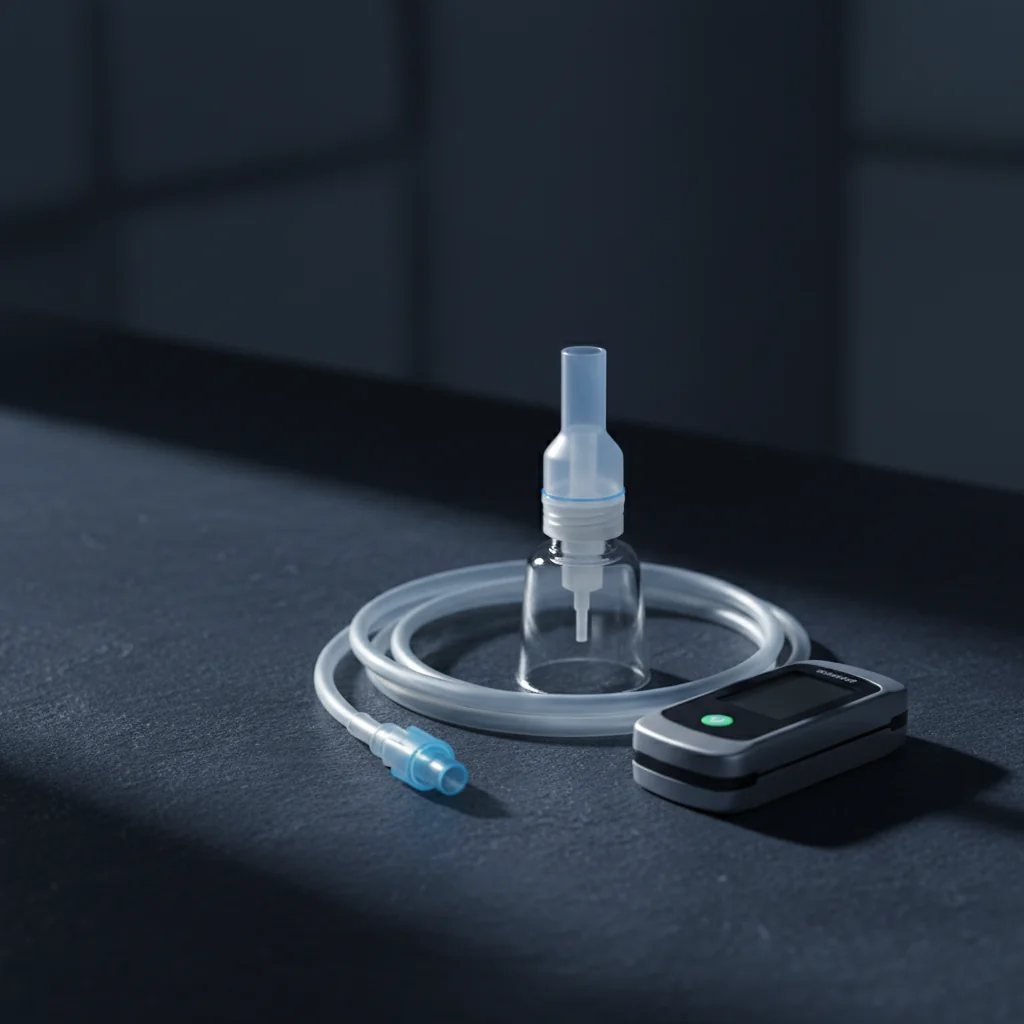
Respiratory Therapists treat patients with breathing disorders — asthma, COPD, pneumonia, and trauma-related lung injuries — using ventilators, oxygen therapy, and aerosol medications. They work in hospitals, ICUs, pulmonary rehab centers, and home health. Becoming an RT requires an associate's or bachelor's degree and passing the TMC and clinical simulation exams.
Time to certify
Required exam
Exam cost
Education
Renewal
Annual openings
What it's actually like
A day-to-day reality check, grounded in current practitioner sources — not just the salary math.
Hours / week
Shifts: 12 hours.
Weekends
Where you work: hospital, long-term care facility, home health.
Physical demand
HighThe role requires long periods of standing and walking, as well as lifting, turning, and moving patients and heavy equipment like ventilators.
Stress level
HighStress stems from managing life-threatening emergencies, dealing with critically ill or dying patients, and handling significant patient loads due to staffing shortages.
A typical shift
- Receive report from the outgoing shift on patient status and any overnight events.
- Assess and manage a caseload of 2-6 mechanically ventilated patients in an ICU or up to 30 patients on a general floor for breathing treatments.
- Administer aerosol-based medications and perform chest physiotherapy to clear lung secretions.
- Monitor and document patient physiological responses to therapy, such as vital signs and arterial blood gases.
- Set up, operate, and troubleshoot respiratory equipment like mechanical ventilators, BiPAP machines, and high-flow nasal cannulas.
- Respond to "code blue" or other medical emergencies to manage patient airways and provide life support.
- Educate patients and their families on managing chronic respiratory conditions and using home equipment.
check_circle Best fit if
- —You can emotionally compartmentalize after dealing with traumatic patient outcomes and then move to the next patient's room.
- —You function well with a high degree of autonomy, making critical decisions independently during emergencies.
- —You prefer a schedule with more days off per week (e.g., three 12-hour shifts) and can handle the intensity of long workdays.
- —You have a strong technical aptitude for operating and troubleshooting complex medical machinery under pressure.
cancel Skip if
- —You are looking for a career with numerous opportunities for vertical advancement into different clinical roles.
- —You need a predictable 9-to-5, Monday-Friday schedule without weekend or holiday commitments.
- —You are squeamish about bodily fluids, particularly respiratory secretions.
- —You have difficulty managing high-stress, life-or-death situations and the emotional toll of losing patients.
Sources cited (5)
The Landscape
Alaska stands out as a unique outlier, paying a high median salary of $97,950 despite being the only state not requiring a state-specific license; here, employers typically mandate active NBRC certification, which is also a common requirement for license renewal even in states without explicit state CE. While nearly all states mandate licensure, the practical implications vary, with some like Hawaii and Colorado relying on NBRC certification to fulfill CE, effectively standardizing a national competency benchmark even without direct state CE requirements.
Beyond salary, state-to-state differences manifest significantly in continuing education (CE) requirements, ranging from minimal state-specific hours to a demanding 30 hours every two or three years in states like New York and California. Most states now require criminal background checks, and many have specific CE mandates such as child abuse identification, HIV/AIDS training, or state jurisprudence exams, underscoring a commitment to public safety and specialized professional development across the board. A closely-related path worth comparing is the Radiology Technologist certification. For a direct earnings-vs-training-time comparison, see Respiratory Therapist vs. Radiology Technologist. You can also compare Respiratory Therapist vs. Licensed Practical Nurse on the same dimensions.
Respiratory Therapist by State
Licensing cost, reciprocity, and median pay across all 50 states.
| State | License | Licensing cost | Reciprocity | Median | vs. National |
|---|---|---|---|---|---|
| Alabama | Yes | $215 | Endorsement | $66,150 | -19.6% |
| Alaska | No | $200 | No license | $97,950 | +19.0% |
| Arizona | Yes | $460 | Endorsement | $79,780 | -3.0% |
| Arkansas | Yes | $4 | Endorsement | $73,870 | -10.2% |
| California | Yes | $300 | Endorsement | $104,820 | +27.4% |
| Colorado | Yes | $285 | Endorsement | $86,220 | +4.8% |
| Connecticut | Yes | $190 | Endorsement | $85,230 | +3.6% |
| Delaware | Yes | $353 | Endorsement | $91,080 | +10.7% |
| District of Columbia | Yes | $444 | Endorsement | $111,950 | +36.1% |
| Florida | Yes | $295 | Endorsement | $81,160 | -1.4% |
| Georgia | Yes | $510 | — | $83,700 | +1.7% |
| Hawaii | Yes | $260 | Endorsement | $94,210 | +14.5% |
| Idaho | Yes | $300 | — | $78,460 | -4.6% |
| Illinois | Yes | $120 | — | $84,090 | +2.2% |
| Indiana | Yes | $25 | Endorsement | $79,730 | -3.1% |
| Iowa | Yes | $275 | Endorsement | $74,760 | -9.1% |
| Kansas | Yes | $290 | Endorsement | $76,970 | -6.5% |
| Kentucky | Yes | $350 | Endorsement | $72,750 | -11.6% |
| Louisiana | Yes | $315 | Endorsement | $75,240 | -8.6% |
| Maine | Yes | $65 | Endorsement | $82,470 | +0.2% |
| Maryland | Yes | $615 | Endorsement | $88,960 | +8.1% |
| Massachusetts | Yes | $450 | Endorsement | $102,170 | +24.2% |
| Michigan | Yes | $470 | Endorsement | $79,850 | -3.0% |
| Minnesota | Yes | $612 | Endorsement | $98,710 | +20.0% |
| Mississippi | Yes | $275 | — | $63,270 | -23.1% |
| Missouri | Yes | $240 | Endorsement | $78,390 | -4.7% |
| Montana | Yes | $100 | Endorsement | $81,190 | -1.3% |
| Nebraska | Yes | $318 | Endorsement | $81,590 | -0.8% |
| Nevada | Yes | $300 | Endorsement | $85,480 | +3.9% |
| New Hampshire | Yes | $545 | Endorsement | $95,940 | +16.6% |
| New Jersey | Yes | $475 | — | $100,810 | +22.5% |
| New Mexico | Yes | $490 | Endorsement | $68,870 | -16.3% |
| New York | Yes | $294 | — | $107,810 | +31.0% |
| North Carolina | Yes | $365 | Endorsement | $80,090 | -2.7% |
| North Dakota | Yes | $270 | Endorsement | $81,230 | -1.3% |
| Ohio | Yes | $75 | Recognized | $79,920 | -2.9% |
| Oklahoma | Yes | $100 | Endorsement | $78,800 | -4.2% |
| Oregon | Yes | $100 | Endorsement | $100,560 | +22.2% |
| Pennsylvania | Yes | $30 | Endorsement | $78,490 | -4.6% |
| Rhode Island | Yes | $250 | Endorsement | $86,900 | +5.6% |
| South Carolina | Yes | $240 | Recognized | $77,740 | -5.5% |
| South Dakota | Yes | $75 | Recognized | $68,240 | -17.1% |
| Tennessee | Yes | $360 | Endorsement | $72,140 | -12.3% |
| Texas | Yes | $515 | Recognized | $79,540 | -3.3% |
| Utah | Yes | $90 | Endorsement | $80,650 | -2.0% |
| Vermont | Yes | $305 | Endorsement | $83,820 | +1.9% |
| Virginia | Yes | $320 | Re-exam | $82,910 | +0.8% |
| Washington | Yes | $140 | Endorsement | $101,130 | +22.9% |
| West Virginia | Yes | $510 | Recognized | $68,670 | -16.5% |
| Wisconsin | Yes | $275 | Re-exam | $84,210 | +2.3% |
| Wyoming | Yes | $300 | Endorsement | $79,330 | -3.6% |
Related Certifications
Compare Respiratory Therapist head-to-head
All comparisons →Weighing a Respiratory Therapist career against another credential? Pay, training time, and licensing side-by-side.